
Summary
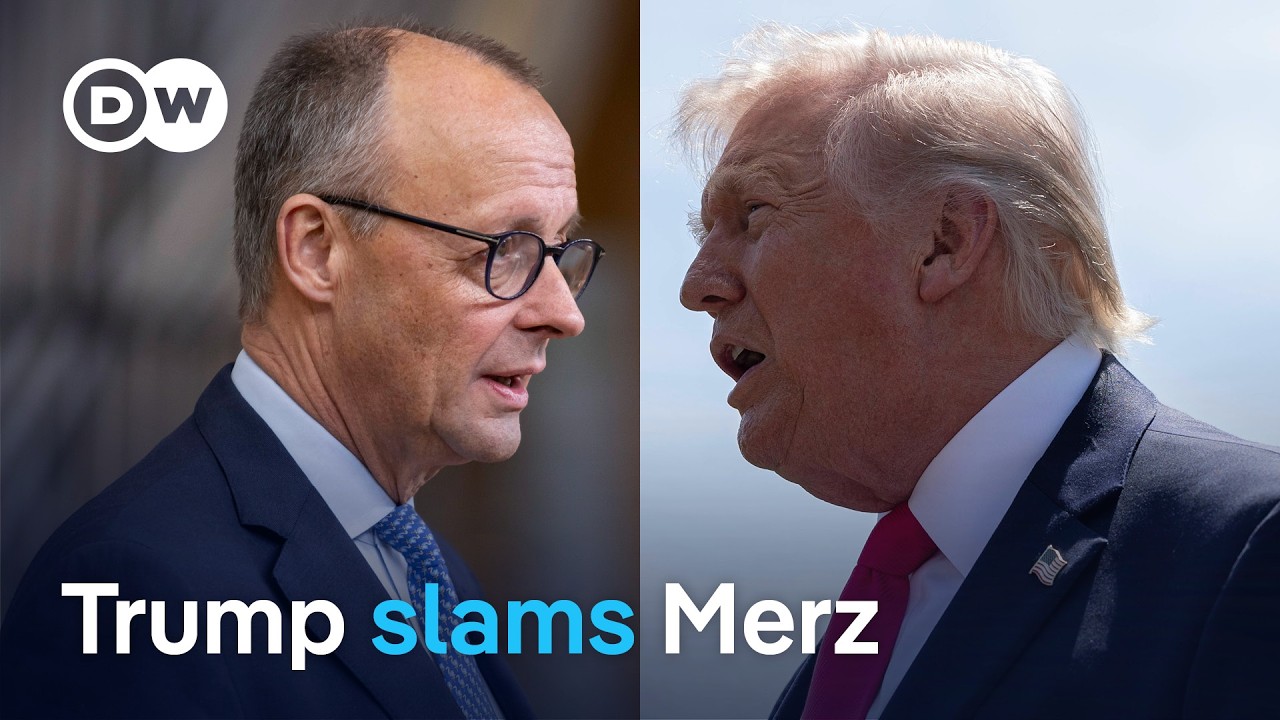
Former US President **Donald Trump** launched a sharp retort against German Chancellor **Olaf Scholz** (via Friedrich Merz, CDU leader) after Merz accused Iran of 'humiliating' the United States. Trump, in a characteristic broadside, dismissed Merz's assessment, stating the German leader 'doesn't know what he's talking about.' This exchange highlights a significant divergence in how Western powers perceive and are responding to Iran's regional actions, particularly amidst ongoing tensions and **Hezbollah** drone strikes in Lebanon. The dispute underscores the volatile nature of international relations and the differing strategic priorities of key global players regarding the Middle East crisis.
Key Takeaways
- Former President Trump publicly criticized German leader Friedrich Merz's assessment of US policy towards Iran.
- Merz accused Iran of 'humiliating' the United States, a statement Trump dismissed.
- The exchange highlights differing perspectives on how to manage the ongoing Middle East crisis and Iran's regional influence.
- Hezbollah drone strikes in Lebanon are occurring concurrently, underscoring the volatile regional security environment.
- The dispute reveals potential rifts in Western allied approaches to foreign policy challenges.
Balanced Perspective
The exchange between Trump and Merz reflects differing political assessments of US foreign policy and Iran's regional influence. Merz's statement, likely aimed at a domestic audience critical of the current US administration's approach, highlights concerns about perceived weakness. Trump's response, typical of his 'America First' rhetoric, prioritizes projecting strength and dismissing criticism from allies. The actual impact on US-Iran relations or broader Middle East policy remains to be seen, as it appears to be largely a political skirmish.
Optimistic View
This transatlantic spat, while seemingly petty, could ultimately lead to a more robust and unified Western strategy toward Iran. By forcing a public debate, it might compel leaders to articulate clearer objectives and more effective policies, potentially isolating Iran further and de-escalating regional tensions. A stronger, more coherent approach could bolster deterrence and encourage a return to diplomatic solutions, ultimately benefiting global stability.
Critical View
This public spat between a former US president and a leading German politician signals a deepening fragmentation of Western foreign policy, particularly concerning Iran. It risks undermining any semblance of a united front, emboldening adversaries like Iran, and creating confusion among allies. The focus on political point-scoring distracts from the urgent need for a cohesive strategy to address escalating regional conflicts, potentially leading to further instability and miscalculation.
Source
Originally reported by The Guardian